
REVIEW · VIENNA (STATE) · AUSTRIA FILM LOCATION TOURS
“The Third Man” Film Location Tour
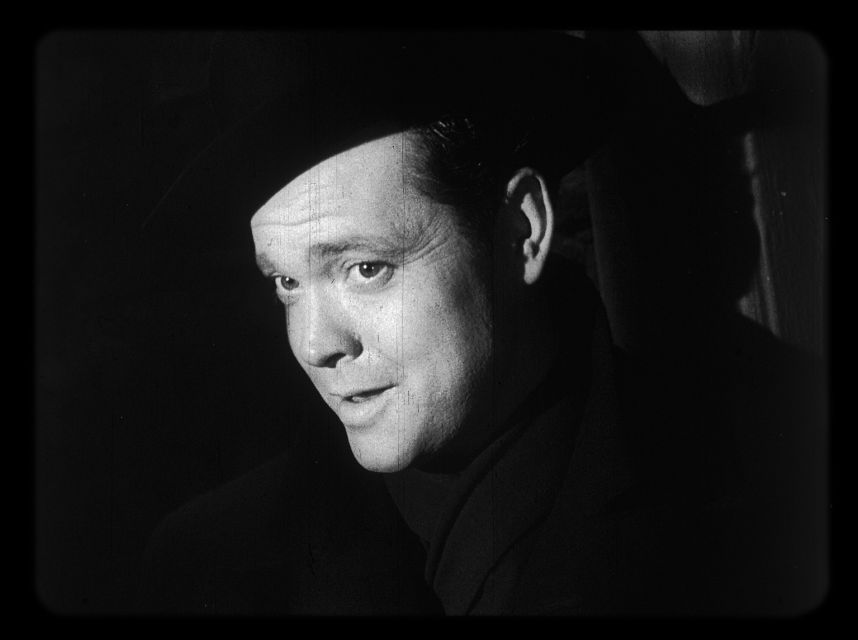
Vienna’s shadows tell a story. This two-hour walking tour follows Harry Lime and Orson Welles through the old city, using original filming locations, archival images, and lively commentary to explain both the movie and postwar Vienna. I especially like the way it connects cinema with Cold War history, and how guides such as Brigitte Timmermann, Christopher, and Christian Timmermann bring real authority and humor to the walk. The main drawback is practical: the route covers plenty of cobblestones, may run beyond two hours, and does not include the famous sewer scenes, cemetery, or Prater Ferris wheel.
The tour starts at U4 Stadtpark station and moves through central Vienna, mainly around the old town south of Stephansplatz. I also like that you do not need to be a film scholar to enjoy it. The guide explains the plot, production, politics, ruins, Allied occupation, spies, and black market in clear terms, though a bilingual tour can take longer if the commentary is given in both German and English.
Key things to know before booking
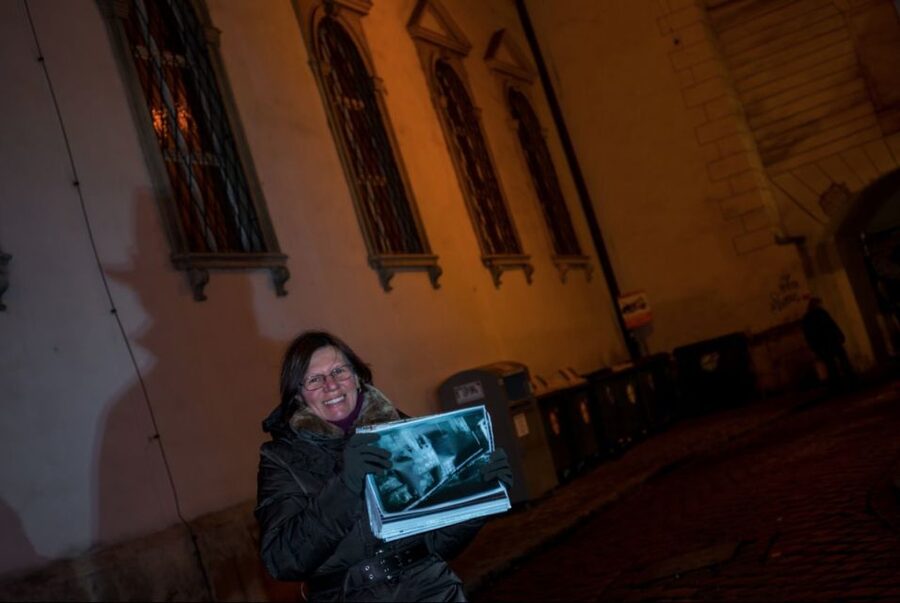
- The walk uses real central Vienna locations: See streets, alleys, buildings, and viewpoints connected with the film rather than visiting a film set.
- The history goes far beyond movie trivia: Learn how occupied Vienna, postwar shortages, espionage, and wartime damage shaped the story.
- Guides bring serious film research: Brigitte Timmermann is associated with a major book on the film, while Christopher and Christian Timmermann are praised for detailed, entertaining talks.
- The sewer is not part of the tour: The underground scenes were recreated for the film, and this experience does not enter Vienna’s sewer system.
- The route is a real walking tour: Wear comfortable shoes and allow extra time, since some groups have taken close to three hours.
- The $30 price is strong value: You get a guided city walk, film analysis, local history, production stories, and a state-certified guide.
Why The Third Man still fits Vienna so well
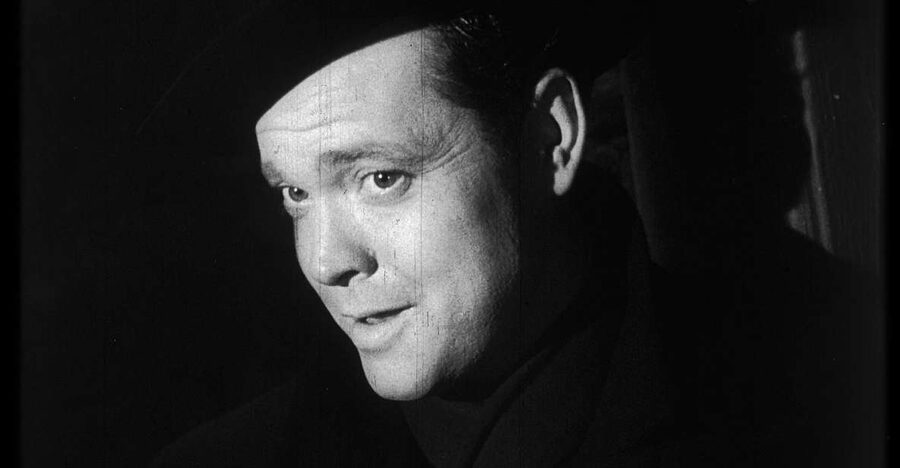
The Third Man is more than a chase film with a famous zither soundtrack. It is a portrait of Vienna shortly after the Second World War, when the city was divided among the American, British, French, and Soviet powers.
Carol Reed’s film uses damaged streets, dark passageways, empty lots, and grand buildings to create a city that feels uneasy and morally off-balance. Harry Lime moves through that world with charm and menace. The tour shows how much of that atmosphere came from real Vienna, and how much was shaped by clever filmmaking.
Your guide sets the scene before the locations begin. You learn about Graham Greene’s screenplay, the international production, the actors, and the way Vienna became part of the film’s identity. The talk also covers the difference between the Vienna seen on screen and the city that was actually filmed.
That distinction is one of the tour’s great pleasures. A street corner may appear to be beside another location because of editing, camera angles, or a carefully chosen view. A sewer sequence may look documentary-like, but it was not filmed as a simple trip through the city’s underground system. Archival photographs help you see how the movie altered real places without losing their character.
A few more filming locations around the world worth a look
- From London: Harry Potter Warner Bros Studio Tour
★ 4.7 · 26,588 reviews - Magical London: Harry Potter Guided Walking Tour
★ 4.7 · 22,044 reviews - London: Warner Bros. Studio Harry Potter Tour & Branded Bus
★ 4.7 · 19,194 reviews
Meeting the tour near Stadtpark
The meeting point is U4 Station Stadtpark, at the Johannesgasse exit. This is a practical place to start because the subway brings you close to the historic center without requiring a long preliminary walk.
From there, the route heads toward the old city. The walk is mainly in central Vienna, with much of it south of Stephansplatz. You should expect a mixture of ordinary city streets, narrow cobbled lanes, historic façades, and locations where the film’s postwar mood still makes sense.
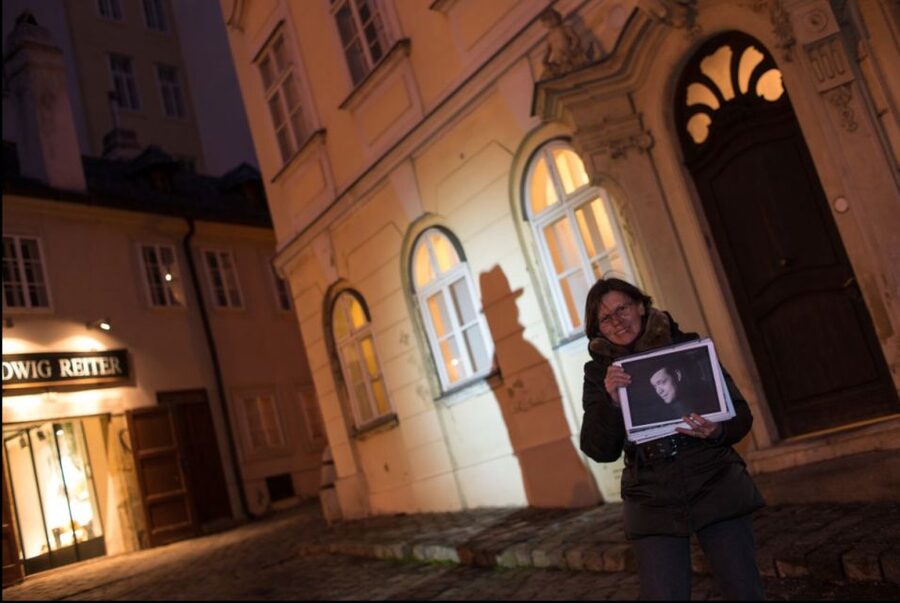
The guide uses photographs to compare the screen image with the present-day view. This is more useful than simply being told that a location appeared in the movie. You can look at the old image, find the angle, and then notice what has changed.
The walk also gives you a useful first look at this part of Vienna. It is not a general city tour, but the route passes through enough of the Inner Stadt to help you understand how the old center fits together.
Following Harry Lime through the old center
The central section is where the film and the city begin to work as one subject. The guide points out important locations and explains how each was used. Some are instantly recognizable. Others make sense only after you see a photograph or hear the production story.
The winding lanes are especially effective. Their uneven paving and close-set buildings help explain why Reed’s Vienna feels so compressed and suspicious. The camera often tilts the city into something unstable, and the tour gives you a chance to notice those choices in place.
One useful film detail is the famous Dutch tilt, the slanted camera angle that makes the world feel crooked. You do not need technical film training to appreciate it. Once the guide points out how the angles, shadows, and narrow streets work together, familiar scenes become easier to read.
The tour is not limited to the most obvious postcard sights. That is a strength. You see parts of Vienna through the film’s point of view, where a side street or passage can matter more than a grand palace.
At each stop, the guide layers several kinds of information:
- What happened in the film
- What the location looked like during production
- How the scene was staged or altered
- What was happening in Vienna after the war
- How the cast and crew worked in the city
This approach keeps the walk moving. It also helps nonfans stay interested because the city itself remains central.
The postwar city behind the plot
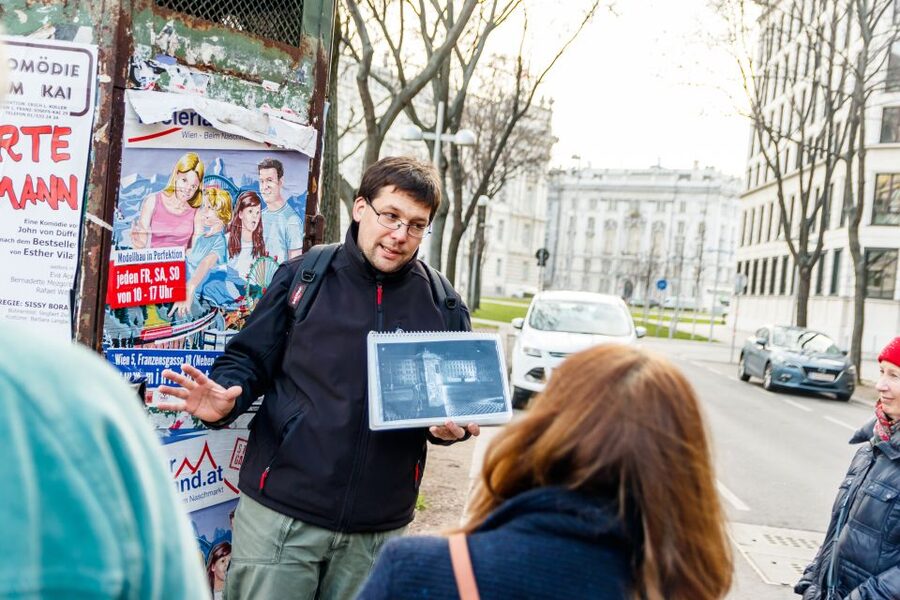
The strongest part of the experience is its explanation of Vienna after 1945. The film’s smugglers, divided loyalties, and shadowy deals are not just dramatic decoration. They belong to a city marked by occupation, scarcity, ruined buildings, and competing political interests.
You hear about the Allied zones and the presence of both Western and Soviet power. The guide also explains the black market and the atmosphere of suspicion between East and West. These details turn the film from a stylish thriller into a document of a tense moment in European history.
This context is especially useful because The Third Man can seem mysterious when watched without background. Why is everyone so guarded? Why does the city feel fragmented? Why do small transactions carry such danger? The tour gives you the answers without turning the walk into a dry lecture.
Several guides connected with the tour have spent years researching the film. Brigitte Timmermann is described as a historian and author who interviewed people involved in the production. That kind of research shows in the stories about Greene, Reed, Welles, the actors, and the disputes behind the scenes.
The talk also includes lighter material. You may hear about Orson Welles trying to undermine parts of the project, production disagreements, local customs, and the way the crew worked in Vienna. Humor helps keep the more serious political material from becoming heavy.
Same place, a completely different screen:
- Edinburgh: Harry Potter Magical Guided Walking Tour
★ 4.8 · 11,944 reviews - London: Warner Bros. Studio Harry Potter Tour with Transfers
★ 4.6 · 9,709 reviews - Hobbiton Movie Set: Guided Tour Ticket
★ 4.9 · 8,167 reviews - Los Angeles: Warner Bros. Studio Tour Hollywood
★ 4.6 · 7,191 reviews
What the tour does not include
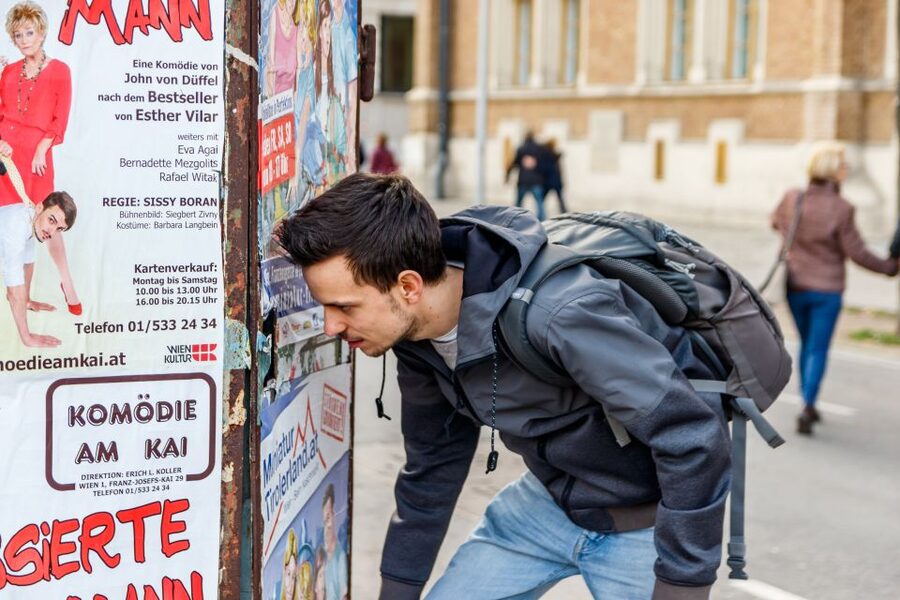
The most important limitation is the sewer. The tour does not take you into Vienna’s sewer system, so do not book it expecting to stand below the streets where the movie’s final pursuit unfolds.
That is not quite the disappointment it may sound. The film’s sewer set was largely a constructed space, and the walking tour instead explains how the scenes were made and what was real or altered. For many people, that behind-the-scenes explanation is more useful than a short underground visit.
The cemetery and Prater Ferris wheel are also outside the main walking route. The Ferris wheel is too far away for this central walk, and the cemetery is not included in the advertised two-hour path. If you want to connect those places with the film, plan separate visits.
The Prater wheel is easy to treat as an extra Vienna activity, but allow separate time for it. The same applies to the Third Man Museum, which has extensive memorabilia and production material. One useful plan is to take the walking tour first, then visit the museum or watch the film again afterward.
How long, how hard, and how the language works
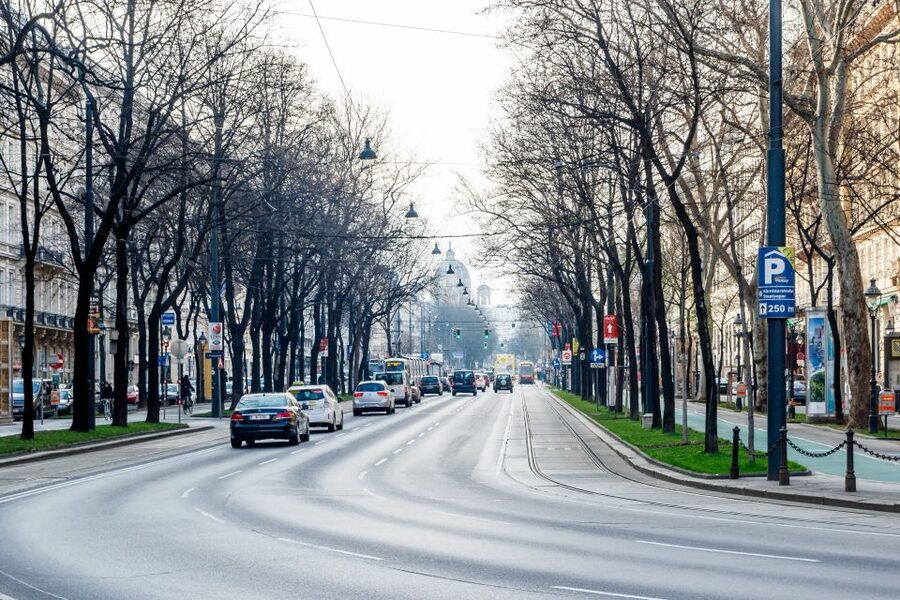
The stated duration is two hours, but you should keep some flexibility. One account put the full experience closer to three hours, and a route with many stops can easily stretch when questions and bilingual explanations are involved.
This is not a strenuous mountain walk, but it is still a city walk over cobblestones. A participant in their sixties found the final part tiring, mainly because of the distance and time on foot. Comfortable shoes matter, and you should not schedule a tight appointment immediately afterward.
Tours are offered in German and English. The exact language arrangement can affect the pace. If one guide gives every explanation in both languages, the same material takes longer. A separate English-language departure would be more efficient when available, so check the starting time and language before booking.
The tour runs rain or shine. Vienna’s weather can change quickly, so bring suitable clothing and shoes with enough grip for wet paving. There is no promise of shelter at every stop.
The guides make the real difference
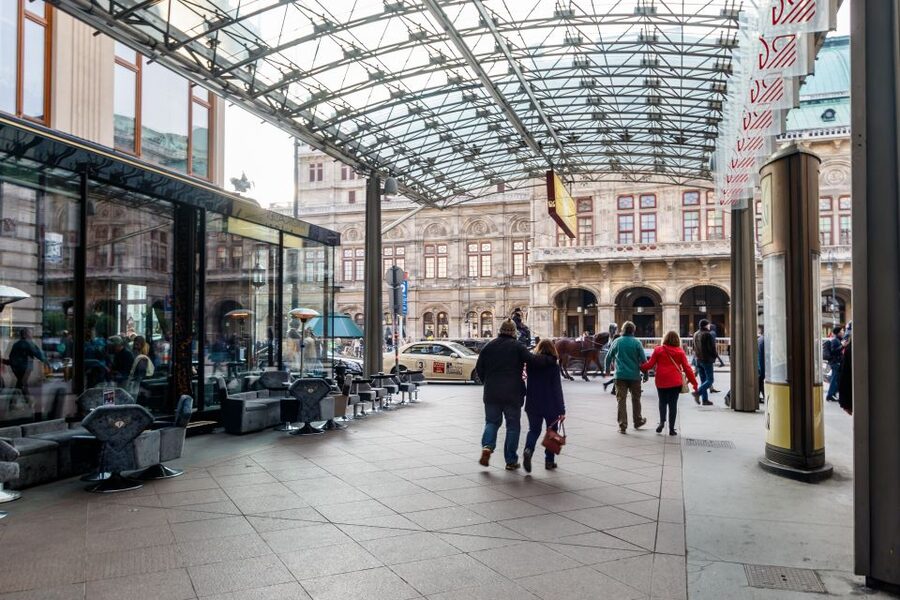
The experience depends heavily on who leads it, and this is good news. The guides are not simply reciting a standard script.
Brigitte, Brigita, or Brigitte Timmermann has been praised for combining film research with the wider story of Vienna. Christopher is known for energy, humor, and the ability to move between German and English. Christian Timmermann has also been praised for linking the movie to music, politics, actors, and the city.
Other guides, including Kirstin, Kersten, and Sonia, have received praise for making the tour welcoming and easy to follow. The names and exact guide may vary by departure, but the repeated pattern is clear: the best part is the guide’s personal command of the material.
Some guides have written books or conducted long-term research on The Third Man. That matters because the film has accumulated plenty of myths. A well-prepared guide can sort out what happened, what was recreated, and what was changed for dramatic effect.
The final stop has been described as a special treat, and some departures have included an unexpected musical element connected with Vienna’s traditional sound. Since that detail may vary by guide and date, treat it as a possible bonus rather than a promised feature.
Is $30 a fair price?
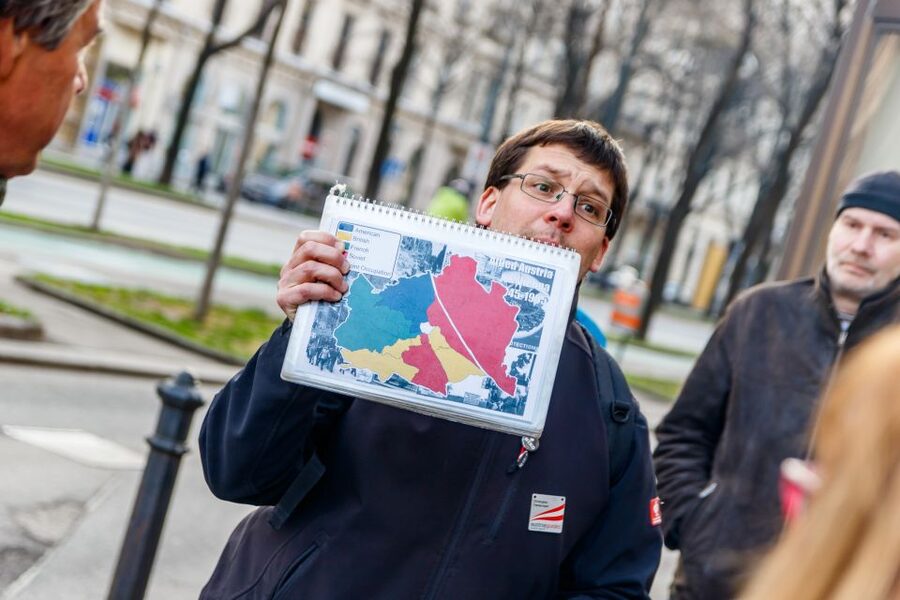
At $30 per person, this is a strong buy if you have any interest in the film, film production, or twentieth-century Vienna. You are not paying only for a list of locations. The price includes a state-certified guide, visual comparisons, production stories, and a focused history lesson delivered while you walk.
The value is even better if you are planning to watch the film again. Locations that might pass quickly on screen become easier to recognize, and details about the camera work, actors, and setting give the movie more weight.
It is also a fair choice for a companion who has not seen The Third Man. The guide provides enough plot and character background to make the tour accessible, while the postwar history gives the walk a purpose beyond fandom.
The value drops slightly if you dislike walking, have limited time, or want the Prater wheel and sewer included. In those cases, this is not an all-in-one movie attraction. It is a central Vienna walking tour with a film focus.
How to get the most from the experience
Watch The Third Man before you go if possible. You will recognize locations faster, understand the character references, and appreciate the photographs more fully. If you have not seen it, you can still enjoy the history and city walk, but the film details will not land as strongly.
Bring curiosity rather than a checklist. Some stops may look ordinary at first. The guide’s explanation is what reveals their importance, so give the locations a moment instead of expecting every one to look exactly as it did in 1949.
You should also plan extra time after the tour. A return to the film, a visit to the Third Man Museum, or a separate trip to the Prater Ferris wheel can turn the walk into a full day devoted to the movie and its Vienna.
The tour is a particularly good fit for:
- Fans of The Third Man
- People interested in Graham Greene, Orson Welles, or Carol Reed
- Visitors who enjoy film production details
- Anyone curious about occupied and postwar Vienna
- Couples or friends looking for a different kind of city walk
- History-minded visitors who want more than palace interiors and famous squares
Should you book The Third Man Film Location Tour?
Book it if you have seen the film, enjoy old-city walks, or want a clear introduction to Vienna’s postwar political story. The combination of real locations, archival images, production anecdotes, and expert guides gives the experience much more substance than a basic movie-location checklist.
You should think twice if you need a short, easy walk or specifically want to enter the sewers. The route can run long, cobblestones may tire you, and the Ferris wheel and cemetery require separate plans.
For most visitors, though, the $30 cost is modest for two hours of focused storytelling in central Vienna. Watch the film first, wear good shoes, and leave room in your schedule. If you are both a film fan and a history enthusiast, this is one of the city’s most rewarding themed walks.
FAQ
Where does The Third Man Film Location Tour begin?
The meeting point is U4 Station Stadtpark, at the Johannesgasse exit in Vienna.
How long does the tour last?
The advertised duration is two hours. Some departures may take longer, especially when the guide gives commentary in both German and English or allows time for questions.
What languages are available?
The tour is offered in German and English.
Is the sewer system included?
No. The tour does not include a visit to Vienna’s sewer system.
Does the tour visit the Prater Ferris wheel?
No. The Prater Ferris wheel is too far from the central walking route and is not included in the tour.
Does the tour visit the cemetery from the film?
No. The cemetery is not included in the walking route.
Does the tour operate in bad weather?
Yes. The tour takes place rain or shine.
Can I cancel for a full refund?
Yes. You can cancel up to 24 hours before the tour for a full refund. You can also reserve now and pay later, keeping your plans flexible.
Just added around the world
- Zion: Harry Potter-Inspired Zion Ghost Tour with Sunset View★ 5.0 · 8 reviews
- York: Game of Thrones Walking Tour★ 5.0 · 2 reviews
- Skopelos Island: Mamma Mia Filming Locations Tour★ 4.9 · 32 reviews
- Wellington: Lord of the Rings Filming Locations Tour★ 4.0 · 6 reviews
- Wellington: Half-Day Lord of the Rings Locations Tour★ 4.8 · 10 reviews
- Volcano Movie – Experience the Latest Eruptions in Iceland★ 3.6 · 3 reviews
- Wellington: Lord of the Rings Half-Day Guided Tour inc Weta★ 5.0 · 5 reviews
- Virtual reality movie – experience I AM LITHUANIA★ 4.4 · 5 reviews
Austria Film Location Tours, compared.
Public 4h tour to filming locations of “The Sound of Music Movie“
Read our review →
Public 8h tour to sites of “The Sound of Music Movie” & Hallstatt
Read our review →
Sound of Movies: Musical Tour to Salzburg from Vienna
Read our review →
Musical Salzburg: Follow the Trail of the Beloved Movie
Read our review →
Relive the Movie Private Sound of Music Tour in Salzburg
Read our review →Lists this tour appears in