
REVIEW · NORMANDY · FRANCE FILM LOCATION TOURS
Arromanches 360 Circular Cinema Entry Ticket
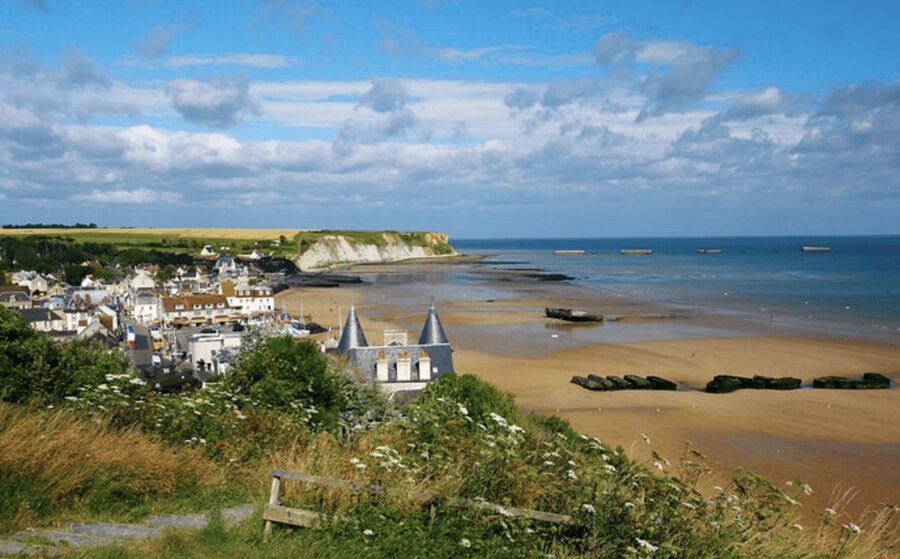
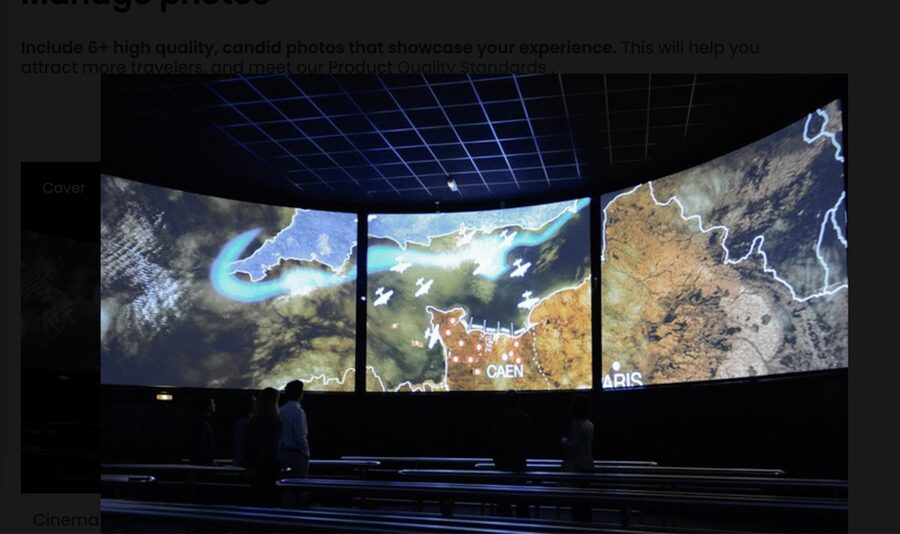
Nine screens put Normandy in your field of view. At Arromanches 360, I like the 20-minute film and its use of British, American, Canadian, French, and German archive footage. I also like the location on the Arromanches clifftops, where you can look toward the remains of the Mulberry harbor after learning why it mattered.
The main drawback is that the presentation moves quickly. One viewer found the video sequence confusing and preferred the nearby Arromanches landing museum, while several others found the film moving and well worth the modest price. I would treat this as a sharp visual introduction, not a complete D-Day museum visit.
Key points to know before you go
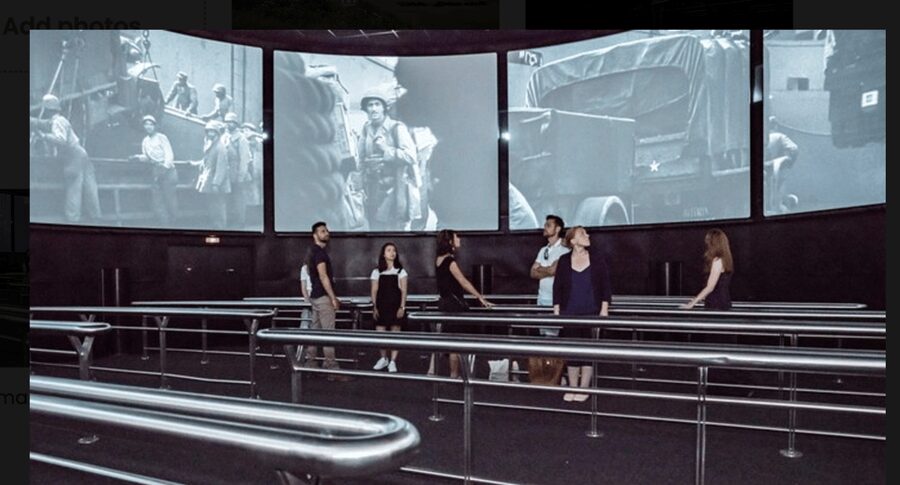
- Nine-screen presentation: The film surrounds you with images rather than showing them on one ordinary cinema screen.
- A 20-minute account: The story covers D-Day and the full 100-day Battle of Normandy, from June 6 to September 12, 1944.
- Five national viewpoints: The footage comes from British, American, Canadian, French, and German archives.
- Clifftop setting: After the film, you can see the remains of the Mulberry harbor from above.
- Useful pre-film displays: Maps, a chronology, the battle’s outcome, and artifacts from the Caen Mémorial collection help set the scene.
- Low-cost add-on: At $8 per person, it is easy to fit into a Normandy sightseeing day, though it may feel limited if you want a full museum experience.
Arriving above Arromanches
Arromanches 360 sits on the clifftops above Arromanches-les-Bains, a setting that gives the visit its strongest sense of place. You are not watching a D-Day film in an anonymous town cinema. You are looking out over the area connected with the artificial Mulberry harbor, one of the engineering projects that helped keep the Allied invasion supplied.
That location matters because the harbor remains are not just an abstract reference in the film. You can see them from the clifftops, then connect the physical view with the wartime images inside. The combination is brief, but it gives the visit a useful rhythm: first look at the site, then see the larger military story, then look back toward the remains with more context.
I would allow extra time around the screening rather than arriving at the last second. The reception area includes maps, a chronology, information about the outcome of the Battle of Normandy, and artifacts from the Caen Mémorial collection. These displays are not described as a full museum, but they help you understand the sequence of events before the film begins.
The site is a good match for an itinerary built around the Normandy beaches. It gives you a short, focused stop at Arromanches without requiring a full day. Comfortable shoes make sense because the visit includes a clifftop setting, and a camera is worth bringing for the harbor remains and the surrounding view.
More entry tickets around France:
- Hobbiton Movie Set: Guided Tour Ticket
★ 4.9 · 8,167 reviews - Official Game of Thrones Studio Tour Admission Ticket
★ 4.8 · 1,002 reviews - Madame Tussauds Hollywood Tickets
★ 4.6 · 516 reviews
The reception displays before the film
The pre-film area does important work in a small space. D-Day can become a blur of beach names, military units, dates, and arrows on maps. The displays give you a simple framework before the screening begins.
Look first at the maps. They help place Arromanches within the wider operation and show how the fighting developed beyond the initial landings. The chronology then gives you a sense of movement through time, while the information about the battle’s outcome explains that Normandy was not won in a single morning.
The film’s stated time span is unusually broad for such a short presentation. It begins with the long preparation for June 6, 1944, then follows the landings on the five beaches in the Manche and Calvados departments. It continues through the Battle of Normandy until the bombing of Le Havre on September 12, a period of 100 days.
That means you should not expect a detailed account of every beach or every battle. Instead, the displays and film work together as an overview. I find that useful if you are arriving with only a basic understanding of D-Day. If you already have spent time at several Normandy museums, the information may feel familiar.
The artifacts from the Caen Mémorial collection add a physical element to the material. The supplied information does not specify each object, so I would not plan the visit around a particular artifact. Think of them as supporting pieces that give the maps and dates a more tangible setting.
Inside the nine-screen cinema
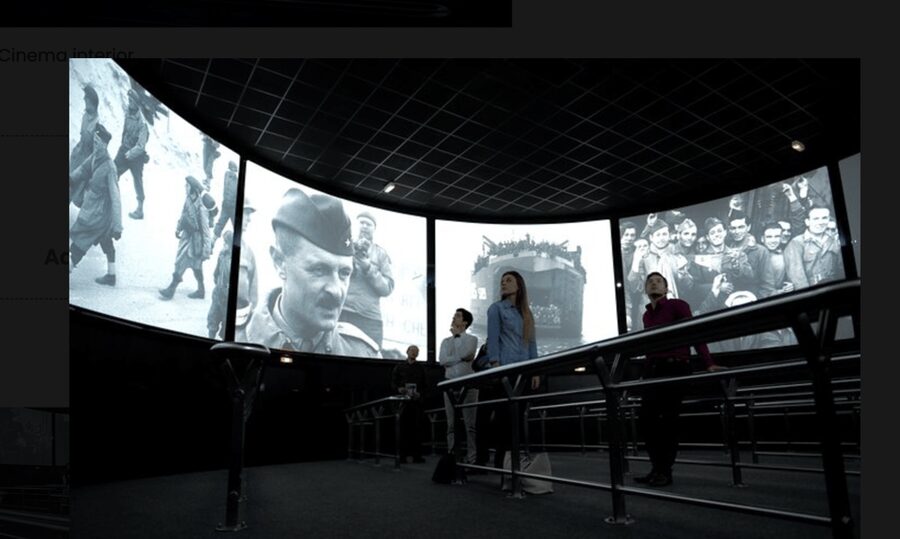
The central experience is a 20-minute film projected on nine screens. This is the reason to visit. Instead of watching one fixed image, you sit surrounded by footage that can place different parts of the story around you.
That format gives the film a strong sense of scale, but it also asks you to pay attention. With images spread across nine screens, you may not catch every detail at once. If you prefer a calm, carefully labeled display, the presentation can feel fast. One low-scoring assessment described the sequence as a confusing series of short videos and found it less worthwhile than the nearby Arromanches landing museum.
That criticism is fair to keep in mind. The show lasts only 20 minutes, and it aims for emotional force rather than a slow lesson. You will not get the same level of individual explanation that a museum’s galleries can provide. The film is designed to create an impression of the operation and its cost, then leave you with a broad understanding of the campaign.
I like the choice of archive sources. The film uses British, American, Canadian, French, and German footage. That range gives the story more than one national viewpoint and reminds you that Normandy was experienced by opposing forces and by civilians caught in the fighting.
The film begins with the preparation on both sides of the English Channel. It then reaches the morning of June 6, when the invasion went ahead despite poor weather. From there, the story moves from the five landing beaches toward the wider 100-day battle.
The wording used to describe the screening as 20 minutes of historical intensity is accurate in one sense: the film compresses a huge operation into a short sitting. You will likely feel the urgency more than you will memorize details. That is why I would pair it with a more detailed museum or battlefield visit if you have the time.
Why the archive footage matters
Old wartime footage can turn dates into human events, but archive material also needs context. Here, the displays provide some of that context, while the film supplies the emotional and visual impact.
The British, American, Canadian, French, and German sources create a broader record than a single-country production would. You get a sense of the invasion as an international operation, not only an American or British story. The inclusion of German material is especially useful because it places the Allied landing within the response of the defending forces.
You should still keep your expectations in check. The supplied information does not identify individual cameramen, units, or specific clips. The screening is not presented as a lecture with detailed captions for every image. If you want to study the source of each scene, you may find the format too quick.
For me, the archive footage is most valuable when combined with the location. You are seeing wartime images while standing above a part of the coast connected to the invasion and the Mulberry harbor. That connection gives the short film more weight than it would have in a standard indoor attraction.
A few more filming locations around France worth a look
- Behind the Scenes of the Grand Rex: 50-Minute Studio Tour
★ 4.6 · 1,138 reviews - Paris: Emily TV Show Locations Guided Walking Tour
★ 4.6 · 140 reviews - Paris Photo Session: Be the Star of Your Own Movie
★ 5.0 · 87 reviews - Paris: Emily Filming Locations Walking Tour
★ 4.9 · 80 reviews
Seeing the Mulberry harbor remains
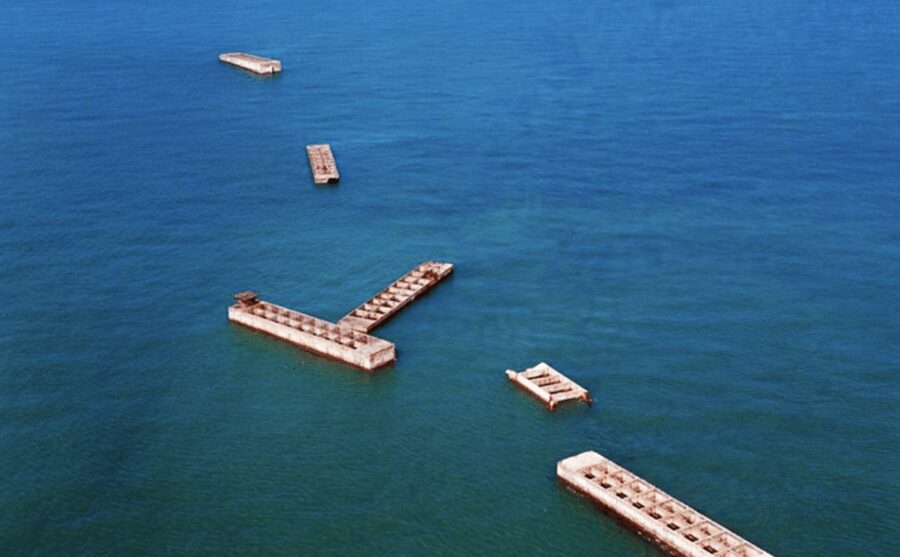
The clifftop view is an important part of the visit, even though the included ticket specifically covers the film. From above, you can see the remnants of the Mulberry harbor at Arromanches.
The harbor was linked to the practical problem of supplying the Allied advance after the landings. You do not need to know every technical detail to understand the basic point: bringing an army ashore was only the beginning. Equipment, fuel, food, and ammunition had to follow.
The remains help you picture that logistical challenge. Instead of seeing the invasion only as soldiers arriving on beaches, you can connect it with the large-scale infrastructure required to keep the campaign moving. That is one of the best reasons to visit this particular cinema rather than watching a D-Day documentary anywhere.
The view also gives you a pause after the intensity of the screening. Take a moment to compare what you have just seen on the screens with what remains outside. The film covers the whole Battle of Normandy, while the harbor view anchors the story to one specific place.
A camera is listed as something to bring, and this is where it will be most useful. I would not treat photography as a replacement for simply looking, but the remains and the clifftop setting are the visit’s most distinctive visual details.
Is $8 good value?
At $8 per person, I consider the cinema a reasonable purchase for most people already visiting Arromanches. The price is low enough that you do not need the film to carry an entire day’s sightseeing. You are paying for a short presentation, a few supporting displays, and access to the clifftop setting.
The value depends on what you want. If you need a concise introduction to D-Day and the Battle of Normandy, the film offers a lot in 20 minutes. The nine-screen format and international archive footage give it more visual force than a basic orientation video.
If you want detailed military history, the price does not change the limitation of the format. The film moves from the invasion to the wider 100-day battle in a short time. You may leave with a stronger feeling for the campaign but still want more detail about specific beaches, commanders, or battles.
The comparison with the nearby Arromanches landing museum is worth taking seriously. A visitor who found the cinema confusing preferred the museum’s videos and displays. I would not see the two attractions as exact substitutes, but if your time or budget allows only one, your choice should match your style.
Choose the cinema if you like audiovisual presentations, archive footage, and a short overview. Choose a museum visit if you prefer objects, written explanations, and the ability to set your own pace. If possible, combine them. The cinema gives you atmosphere and scale, while the museum can supply the detail that the film cannot fit into 20 minutes.
Who will enjoy this stop most?
I would recommend Arromanches 360 to first-time visitors who want a clear starting point for understanding Normandy’s wartime sites. It also suits anyone building a day around the D-Day beaches and looking for a short indoor activity between outdoor stops.
The film may work well for families and mixed-age groups because it does not require a long attention span. The 20-minute length is manageable, and the multi-screen format gives the presentation an immediate visual pull. Still, the subject is serious, and the emotional tone may not suit very young children.
History enthusiasts should view it as an introduction rather than a final word. You may appreciate the international footage and the link to the Mulberry harbor, but you could find the treatment too compressed if you already know the Normandy campaign well.
People with back problems or heart problems are listed as unsuitable for the experience. People prone to seasickness are also advised against it, which is worth noting even though this is a cinema visit rather than a boat trip. The information also presents a conflict about wheelchair access: the activity is described as wheelchair accessible, but another section lists wheelchair users as not suitable. I would confirm the current arrangements directly before booking if access is important to you.
Planning the visit without overcomplicating it
The ticket is valid for one day, with the start time based on availability. That makes it easy to fit into a larger Normandy schedule, but you should check the available screening time before planning the rest of your day.
The film itself lasts 20 minutes. Add time for the reception displays and the view of the harbor remains. The exact total depends on how carefully you read the maps and chronology, but this is still a compact stop rather than a half-day attraction.
Comfortable shoes are recommended. Bring a camera if you want to record the clifftop view, but the important preparation is mental: this is a short film about a very large subject. Go in expecting a focused overview with a strong visual style, not a guided tour or a detailed seminar.
The booking terms are flexible. You can cancel up to 24 hours in advance for a full refund, and a reserve-now, pay-later option is available. Those policies are useful if your Normandy route depends on weather or changing plans, though they do not alter the content of the visit.
The experience has an overall rating of 4 from 16 reviews. The strongest praise focuses on the film being very good, moving, and worth the money. One visitor called it an experience to do without fail, while another simply described it as fantastic and good value. At the same time, the lower assessment shows why you should pair it with a museum if you want more substance.
Should you book Arromanches 360?
Book it if you want a short, emotional D-Day introduction in a meaningful location. The nine screens, international archive footage, pre-film maps, and view of the Mulberry harbor make $8 a fair price for a compact stop.
I would not book it as your only Normandy history experience. The film covers 100 days of fighting in 20 minutes, so some parts will pass quickly and may feel unclear. Pair it with the nearby Arromanches landing museum or another detailed site, and the cinema becomes a useful visual starting point rather than a disappointing substitute for deeper study.
FAQ
How long does the Arromanches 360 film last?
The film lasts 20 minutes. You can also spend time in the reception area viewing maps, a chronology, information about the Battle of Normandy, and artifacts from the Caen Mémorial collection.
What does the $8 ticket include?
The ticket includes the 20-minute film about the Battle of Normandy. The cinema is located on the Arromanches clifftops, where you can see the remains of the Mulberry harbor.
What archive footage appears in the film?
The film uses footage from British, American, Canadian, French, and German archives.
How long is the ticket valid?
The ticket is valid for one day. You need to check availability for the available starting times.
Can I cancel my booking?
Yes. You can cancel up to 24 hours in advance for a full refund. A reserve-now, pay-later option is also available.
What should I bring?
Comfortable shoes and a camera are recommended. The activity information lists people with back problems, heart problems, or seasickness as unsuitable. It also gives conflicting information about wheelchair access, so confirm the current conditions before booking if you use a wheelchair.
Just added around France
- Feel like a star in Paris with photos and a mini movie!★ 5.0 · 19 reviews
- Private Tour with Guide to Midnight in Paris Movie Locations★ 4.5 · 5 reviews
- Paris TV Show Tour in a Open Top Vintage French Car Citroen DS★ 5.0 · 27 reviews
- Da Vinci Code Movie Locations Private Tour in Paris★ 5.0 · 5 reviews
- Private Screen to Streets: A TV Show-inspired Paris Walking Tour★ 5.0 · 60 reviews
- Cinematic Watercolor Workshop and Tea Experience at Boma Café★ 5.0 · 3 reviews
- Paris: a movie tour in Montmartre inspired by Amélie Poulain★ 5.0 · 3 reviews
- Paris: Explore the City Like Emily Tour – Filming Locations★ 4.8 · 69 reviews
France Film Location Tours, compared.

Behind the Scenes of the Grand Rex: 50-Minute Studio Tour
Read our review →



Private Screen to Streets: A TV Show-inspired Paris Walking Tour
Read our review →
Paris TV Show Tour in a Open Top Vintage French Car Citroen DS
Read our review →
Lists this tour appears in