
REVIEW · ILE-DE-FRANCE · FRANCE FILM LOCATION TOURS
Paris: a movie tour in Montmartre inspired by Amélie Poulain
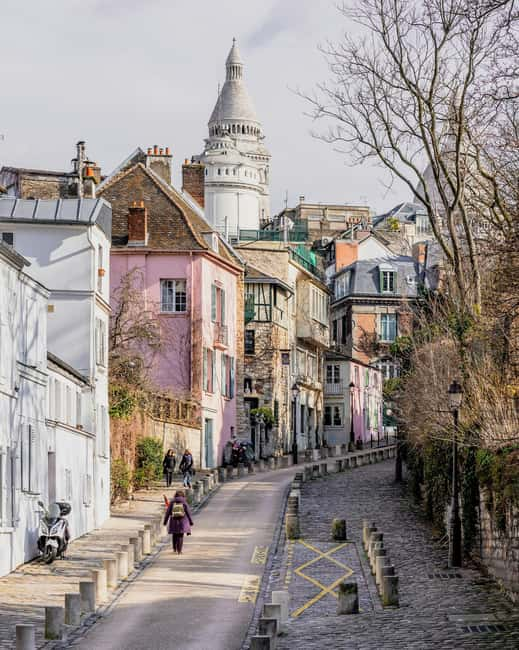
Montmartre turns ordinary streets into movie sets. This 150-minute walking tour follows Amélie Poulain through the Butte while adding scenes from French and American films, all brought to life with pictures and clips on a tablet. I like the mix of cinema and local history, and I like the small group limit of 10, which should make it easier to hear the guide and ask questions. The main drawback is the uphill route and uneven walking, so this is not a good choice if you have limited mobility.
The tour is especially appealing if you want more than a quick photo at Sacré-Coeur. Guide Juliette has earned praise for her warmth, enthusiasm, strong English, and command of French cinema and Montmartre. Just remember that coffee and drinks at Café des Deux Moulins cost extra, and the stop there is part of the atmosphere rather than an included refreshment.
Key points to know before you book
- Amélie leads the story: Visit the film’s grocery, garden, café, Sacré-Coeur scenes, and familiar Montmartre streets.
- The route climbs the Butte: You begin at Lamarck-Caulaincourt and finish near Abbesses after passing major sights and quieter corners.
- Film clips make the walk sharper: Your guide uses a tablet to compare real places with their movie appearances.
- The cinema range is wide: Look beyond Amélie to An American in Paris, Funny Face, Ratatouille, La Vie en Rose, John Wick 4, Emily in Paris, and more.
- Studio 28 adds a cinema landmark: The tour includes a look at the famous cinema associated with Jean Cocteau’s lights.
- The value is strong at $23: For two and a half hours with a live guide and a small group, the price is modest, though drinks and café purchases are extra.
Starting at Lamarck-Caulaincourt with Amélie
Meet outside the Lamarck-Caulaincourt Metro entrance. This is a useful starting point because you begin away from the busiest stretch near Sacré-Coeur, then walk gradually uphill through Montmartre.
The opening section focuses on one of the locations from Amélie of Montmartre. Rather than treating the movie as a simple checklist, the guide uses still images and short film clips to show how directors frame the neighborhood. You get a clearer sense of the difference between the real street and the polished version created for the screen.
That tablet is a small but important part of the experience. A written explanation can tell you that a place appeared in a movie, but seeing the exact shot helps you recognize angles, façades, and street corners. It also keeps the discussion tied to what you are looking at instead of turning into a general lecture about film.
The tour is conducted in English or French. Juliette has been praised for her high-level English and her enthusiasm for French cinema, so English-speaking visitors should find the presentation easy to follow.
A few more filming locations around France worth a look
- Behind the Scenes of the Grand Rex: 50-Minute Studio Tour
★ 4.6 · 1,138 reviews - Paris: Emily TV Show Locations Guided Walking Tour
★ 4.6 · 140 reviews - Paris Photo Session: Be the Star of Your Own Movie
★ 5.0 · 87 reviews
Lapin Agile and the artistic Montmartre
The first major stop is Lapin Agile, one of Montmartre’s best-known cabarets. The guided portion here is brief, about five minutes, but it places the neighborhood’s movie image in a wider setting.
Montmartre has long been linked with cabaret, painters, performers, and writers. The tour connects that artistic identity with the way cinema has represented the area. French films do not use Montmartre only as a pretty backdrop. The streets can suggest bohemian life, romance, eccentricity, hardship, or a slightly dreamlike Paris.
You should expect short stops rather than long visits inside every site. The appeal comes from the sequence: a cabaret, a vineyard, a basilica, a square, a café, and quiet residential streets. Together, they explain why directors keep returning here.
The Clos Montmartre vineyard and Sacré-Coeur
The Vigne du Clos Montmartre gives you one of the area’s more surprising sights. A vineyard in Paris sounds odd until you see it on the hill. The stop is short, but it adds a useful counterpoint to the grander landmarks nearby.
From there, the route continues toward Sacré-Coeur Basilica. The basilica is one of the tour’s main visual anchors, and it appears in Amélie as well as other screen productions. You get about 10 minutes of guided attention here, enough for the guide to discuss its film use and place it within Montmartre’s identity.
The route involves climbing, and this is where comfortable shoes matter most. Bring water. The tour is not recommended for people with mobility impairments, and that warning should be taken seriously. Even if the pace is manageable, the hill and street surfaces can make the walk tiring.
Place du Tertre, La Maison Rose, and Dalida
Place du Tertre brings you into one of Montmartre’s most recognizable scenes. It is closely associated with artists and tourist life, and its appearance in films helps explain why directors use it when they want an instantly recognizable Montmartre setting.
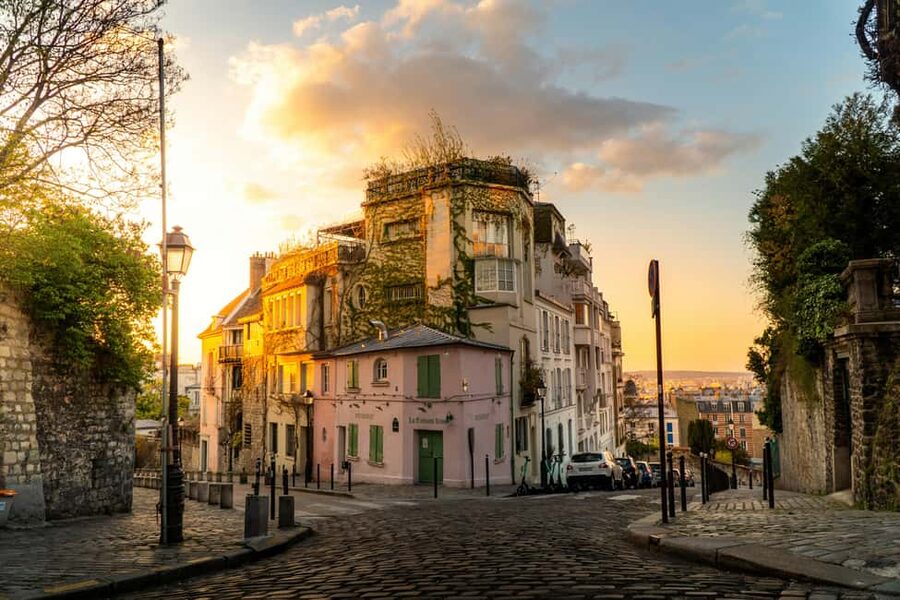
The stop at La Maison Rose shifts the mood. Its colored exterior has become one of the neighborhood’s favorite visual markers. The guide can show how a place that looks almost too picturesque for real life works so well on screen.
Next comes the Dalida Statue, followed by Maison de Dalida. These stops connect cinema with the people who helped shape Montmartre’s public image. The tour is not only about fictional characters. It also looks at performers and artists who became part of the district’s story.
The statue and house are short guided stops, about five minutes each. That is enough time for context and photographs, but not enough for a full museum-style discussion. If you prefer long visits at each attraction, this format may feel quick. If you like moving through a neighborhood while collecting film and cultural details, the pace should suit you.
Same place, a completely different screen:
- Paris: Emily Filming Locations Walking Tour
★ 4.9 · 80 reviews - Paris: Explore the City Like Emily Tour – Filming Locations
★ 4.8 · 69 reviews - Private Screen to Streets: A TV Show-inspired Paris Walking Tour
★ 5.0 · 60 reviews - Paris TV Show Tour in a Open Top Vintage French Car Citroen DS
★ 5.0 · 27 reviews
Le Passe-Muraille and the magic of the ordinary
Le Passe-Muraille is a particularly fitting stop for an Amélie-themed walk. The name refers to the figure who can pass through walls, a playful work of public art based on a story connected with Montmartre.
This is the kind of place that can be easy to miss if you explore only the major sights. The guide’s role is useful here because the tour points out details you might otherwise pass without understanding. The stop also matches the slightly magical tone associated with Amélie, where normal streets often seem to contain a private joke or small surprise.
The guide’s film clips help make that connection clear. You are not simply told that Montmartre is cinematic. You see how filmmakers turn a doorway, wall, café, or street into part of a character’s world.
Moulin de la Galette and the old movie image
Moulin de la Galette adds another famous Montmartre reference. The windmill and its surrounding area have appeared in paintings, films, and popular images of Paris. On this tour, the stop helps explain how artists and directors have repeatedly borrowed Montmartre’s visual symbols.
The route also includes Bateau-Lavoir, a place linked with the area’s artistic life. These stops broaden the tour beyond the one film named in its title. You may arrive mainly for Amélie, but you leave with references to a much larger group of films.
The selection includes An American in Paris from 1951, Funny Face from 1957, A Monster in Paris, Ratatouille, La Vie en Rose, John Wick 4, and Emily in Paris. The genres vary widely. That range matters because it shows Montmartre serving different purposes: a romantic Paris, a cartoon Paris, a musical Paris, a dramatic Paris, and an action-film setting.
Studio 28 and Paris through a filmmaker’s eyes
A look inside Studio 28 is one of the tour’s strongest cinema-focused elements. It is known for Jean Cocteau’s lights and gives the walk a direct connection to the history of moviegoing, not just movie locations.
This stop is especially useful for anyone who wants to understand how cinema shaped Parisian culture. You are not only standing where a character stood. You are also visiting a place associated with the act of showing films and with a major French creative figure.
The information provided does not promise a full screening or extended indoor visit, so set your expectations accordingly. Think of Studio 28 as a meaningful stop within a walking route, not a separate cinema tour.
Café des Deux Moulins and the Amélie pause
Fans of Amélie will recognize Café des Deux Moulins as one of the tour’s most anticipated stops. The café is where Amélie works in the film, and it offers a direct connection between the fictional character and the real Montmartre neighborhood.
You can order a coffee or crème brûlée here, but the cost is not included. That is worth knowing before you arrive. The stop works best if you see it as an optional pause and a chance to look around, rather than as part of the tour price.
If you are trying to keep the day inexpensive, you can simply enjoy the location without ordering. At $23, the tour already gives you a long guided walk, film material, and access to a small group. Buying a drink is a personal extra, not a requirement for getting value from the experience.
What the $23 price really buys
The price is low for a two-and-a-half-hour guided walk in central Paris. You are paying for a live guide, a focused theme, a small group of no more than 10 people, and the tablet presentation. The guide’s personal knowledge is the part that makes the fee worthwhile.
A standard sightseeing walk might show you Sacré-Coeur and Place du Tertre. This tour adds a reason to look again. You learn why a certain street matters to Amélie, how another film used the same district, and how Montmartre’s artists and performers shaped the way Paris appears on screen.
The value is strongest for people who enjoy stories and visual comparisons. If you have no interest in films, a general Montmartre tour may suit you better. If you love Amélie or want a fresh way to see familiar sights, $23 is a fair price.
Timing, group size, and the final stop
The walk lasts 150 minutes and ends at one of two drop-off points around Abbesses, including 22 Rue des Abbesses. Ending near Abbesses is practical because you remain in Montmartre, with access to more cafés, shops, and Metro connections afterward.
A 10-person limit is helpful on streets where larger groups can become awkward. You should have a better chance of seeing the tablet, hearing the guide, and asking a question without holding up a crowd.
The short guided stops also keep the route moving. Most locations receive about five minutes of explanation, while Sacré-Coeur receives about 10 minutes. This gives you broad coverage rather than long time at any one site.
Book with comfortable shoes and water. The tour allows free cancellation up to 24 hours before departure, and you can reserve now and pay later, which helps if your Paris schedule is still shifting.
Who will enjoy this Montmartre movie walk?
I would recommend it most strongly to:
- Fans of Amélie who want to see the real places behind the film
- Movie lovers interested in French and American cinema
- First-time visitors who want Montmartre’s major sights with a clear theme
- Repeat visitors looking for a different way to explore the hill
- Couples and small groups who prefer a personal, story-led walk
- English-speaking visitors who want a guide comfortable discussing French cinema in English
I would be more cautious if you dislike hills, need step-free access, or prefer spending a long time inside individual attractions. The route is a walking tour, not a series of leisurely indoor visits.
Should you book this tour?
Book it if Amélie is one of your favorite films, or if you like seeing how real places become movie locations. Juliette’s enthusiasm, the small group, and the film clips make this more useful than simply following a map of filming spots.
Skip it if you want a relaxed café outing, a fully accessible route, or a general history tour without a cinema theme. For most film fans, though, the combination of Montmartre’s landmarks, quieter streets, and movie stories makes $23 good value.
FAQ
Where does the tour begin?
It begins outside the Lamarck-Caulaincourt Metro entrance in Montmartre.
Where does the tour finish?
It finishes at one of two drop-off locations near Abbesses, including Place des Abbesses and 22 Rue des Abbesses.
How long does the tour last?
The tour lasts 150 minutes.
What languages are available?
The live guide offers the tour in English or French.
How large is the group?
The group is limited to 10 participants.
Is the Amélie café included?
The tour visits Café des Deux Moulins, but drinks and coffee are not included in the price.
Can I order crème brûlée at Café des Deux Moulins?
Yes. You can order coffee or crème brûlée there, but you pay for it separately.
What should I bring?
Bring comfortable shoes and water.
Is the tour suitable for people with limited mobility?
No. The tour is not recommended for people with mobility impairments.
Can I cancel for a refund?
Yes. You can cancel up to 24 hours in advance for a full refund. You can also reserve now and pay later.
Just added around France
- Feel like a star in Paris with photos and a mini movie!★ 5.0 · 19 reviews
- Private Tour with Guide to Midnight in Paris Movie Locations★ 4.5 · 5 reviews
- Paris TV Show Tour in a Open Top Vintage French Car Citroen DS★ 5.0 · 27 reviews
- Da Vinci Code Movie Locations Private Tour in Paris★ 5.0 · 5 reviews
- Private Screen to Streets: A TV Show-inspired Paris Walking Tour★ 5.0 · 60 reviews
- Cinematic Watercolor Workshop and Tea Experience at Boma Café★ 5.0 · 3 reviews
- Arromanches 360 Circular Cinema Entry Ticket★ 4.0 · 16 reviews
- Paris: Explore the City Like Emily Tour – Filming Locations★ 4.8 · 69 reviews
France Film Location Tours, compared.

Behind the Scenes of the Grand Rex: 50-Minute Studio Tour
Read our review →
Private Screen to Streets: A TV Show-inspired Paris Walking Tour
Read our review →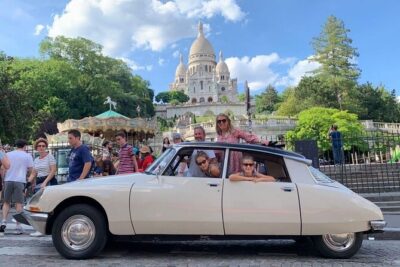
Paris TV Show Tour in a Open Top Vintage French Car Citroen DS
Read our review →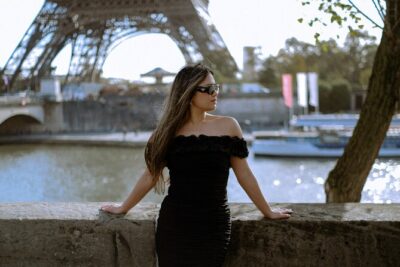
Lists this tour appears in