REVIEW · LOS ANGELES · FILM STUDIO TOURS
Oscar History and Film Set Studio Tour at the Biltmore Hotel
Hollywood history gets a clever upgrade. This one-hour tour of the Millennium Biltmore Hotel combines grand architecture with augmented-reality smartglasses, letting you see old photographs, historic footage, and movie scenes while standing in the actual rooms where events happened. I like the direct link between past and present, and I like the small group size, capped at 10 people. The main consideration is time: one hour gives you a brisk introduction, not a slow, detailed hotel visit.
I also like that the tour goes beyond movie trivia. You hear about the first Academy Awards, Prohibition, presidential history, Downtown Los Angeles, and films such as Ghostbusters, Chinatown, Fight Club, and Oppenheimer. The $25 price is reasonable for a guided experience with technology, though people who prefer quiet architecture tours may find the glasses and video clips a little busy.
Key points to know before booking
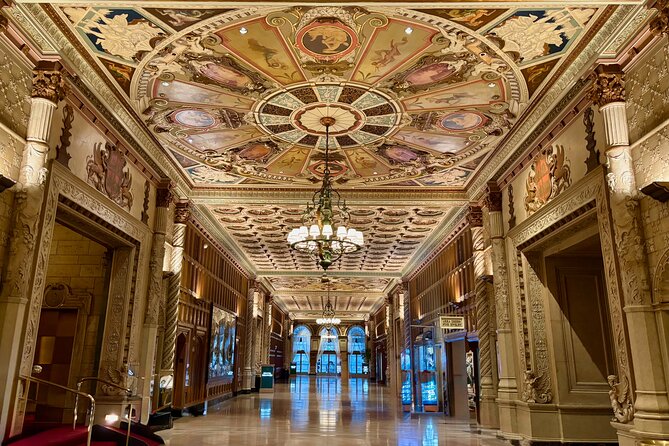
- The Biltmore’s first Oscar connection: Visit the Historic Corridor, linked to the first Academy Awards ceremony.
- Smartglasses put film clips in place: Watch scenes from movies and music videos while standing where they were filmed.
- The tour covers several ornate spaces: See the Music Room, Galleria, Crystal Ballroom, Gold Room, and Rendezvous Court.
- The group is small: A maximum of 10 people should make it easier to hear the guide and ask questions.
- Downtown Los Angeles location: The tour begins and ends at the Millennium Biltmore Hotel, near public transportation.
- Mark and Eloi lead the experience: Both names are associated with the guiding, with personal attention and historical storytelling central to the tour.
Why the Biltmore works so well for a film tour
The Millennium Biltmore Hotel is not just a place where a few scenes happened to be filmed. Its grand rooms, painted corridors, ballrooms, and old Hollywood associations give the tour a strong sense of place.
You are not simply being told that a film used the hotel. The smartglasses can show a clip or photograph in the same setting where the original scene, event, or image belongs. That makes the connection much easier to understand. A regular film-location tour often asks you to remember a scene while looking at a building. Here, the scene is brought into your view.
This is also a useful introduction to Downtown Los Angeles. The tour connects the hotel to the growth of the city, Hollywood’s early years, major political events, and changing popular culture. You might arrive expecting movie facts and leave with a clearer sense of why the Biltmore mattered to Los Angeles long before recent productions used it as a backdrop.
More Film Studio Tours in Los Angeles
- Warner Bros. Studio Tour Hollywood
★ 4.5 · 5,246 reviews - The VIP Experience at Universal Studios Hollywood in California
★ 4.5 · 551 reviews - Warner Bros. Studio Tour & Celebrity Homes Tour Package
★ 3.5 · 225 reviews
Starting at the Music Room
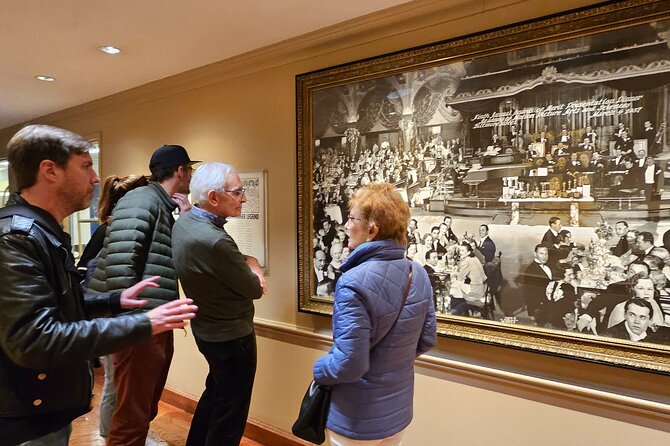
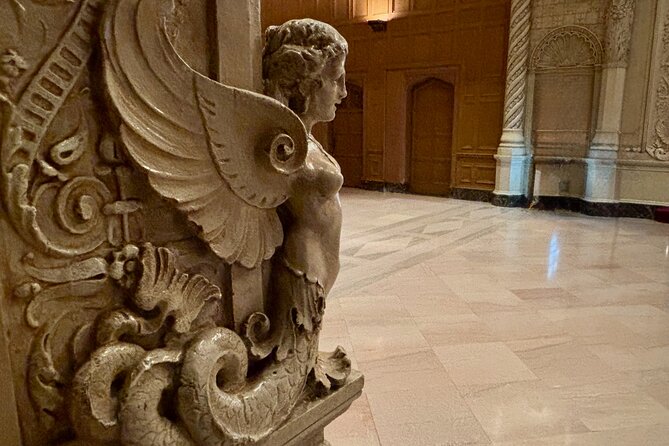
The tour begins at the Millennium Biltmore Hotel, at 507 South Olive Street. The Music Room provides an immediate lesson in the building’s decorative style, with an Italian Renaissance influence and a ceiling filled with cherubs.
This is a strong opening because the hotel’s design is part of the story. You are not walking through plain corridors between film locations. The ornament is the setting. The ceiling, details, and formal atmosphere help explain why the hotel became useful for grand movie scenes, political gatherings, and high-society events.
The AR presentation adds another layer. Historical photographs and footage can show how the room and the city looked in earlier periods. The technology is most useful when it points out something your eye might otherwise miss. Instead of hearing a general lecture about old Los Angeles, you can connect the information to the room around you.
The possible drawback is that people who want plenty of time for photography or architectural inspection may feel rushed. The entire experience lasts about an hour, so the guide must keep the group moving.
Walking through the Galleria
The Galleria is one of the tour’s most decorative sections. Its corridors were painted by Giovanni Smeraldi, and the ornate surfaces help create the hotel’s old Hollywood mood.
This part of the tour is a good reminder that a film location does not have to be a famous exterior. Interiors can carry just as much visual weight. A corridor, doorway, or painted wall may be instantly recognizable once you see the related footage, but easy to overlook when you walk through it without context.
The glasses can place historic images and film material over the present-day space. That approach is especially helpful here because corridors can look similar to one another. A guide such as Mark or Eloi can direct your attention to the right details and explain how the hotel’s appearance has changed.
I would treat the Galleria as a visual stop rather than a long architecture lecture. The tour’s strength is the mix of design, film, and historical material. If you want technical information about every painting or renovation, this short format may not go far enough.
The Historic Corridor and the first Academy Awards
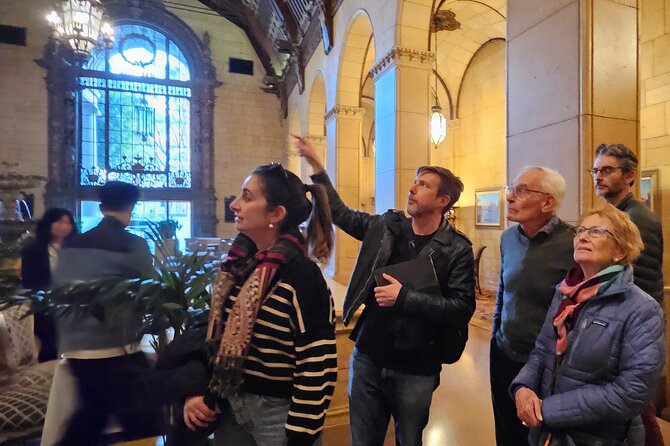
The Historic Corridor is one of the most important stops for anyone interested in Oscar history. The first Academy Awards were held at the Biltmore, giving the hotel a direct place in the beginnings of the film industry’s most famous awards tradition.
This is where the tour’s title makes sense. You are not just looking at a hotel associated with celebrity culture. You are standing in a location tied to the early organization of the Academy Awards.
The AR material can show older views and footage while you remain in the modern hotel. That connection between a present-day room and an earlier ceremony is the best reason to choose this experience over a standard hotel visit. It turns a historical fact into something you can picture.
I especially like this stop for first-time visitors to Los Angeles who want context. Hollywood history can feel scattered across the city. The Biltmore gives you one compact location where several major strands meet: cinema, architecture, politics, and Downtown LA.
More Film Studio Tours in the USA
- Universal Studios Hollywood: VIP Tour with Ticket
★ 4.6 · 170 reviews - Los Angeles: Warner Bros Studio Hollywood & Bus Tour Package
★ 3.6 · 150 reviews - Universal Studios Hollywood: Halloween Horror Nights
★ 4.2 · 98 reviews - Warner Bros. Studio Tour & Hop-on Hop-off Bus Tour Package
★ 3.5 · 55 reviews
The Olive Street entrance and its movie identity
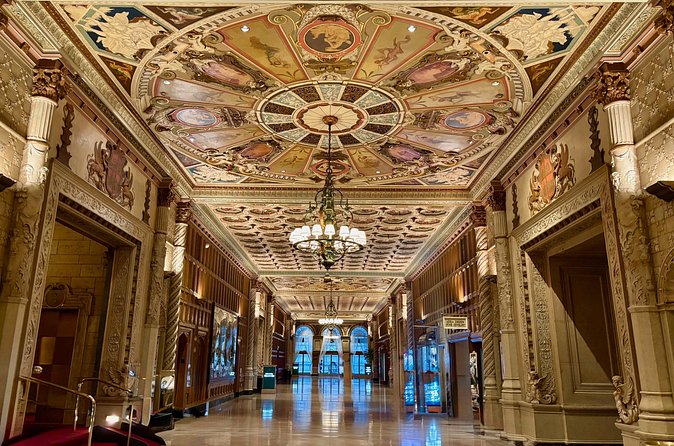
The VIP Olive Street Entrance appeared in Chinatown, one of the films associated with the hotel. This stop gives the tour a different flavor from the Oscar material. Instead of focusing on a ceremony or public event, it shows how the hotel can become part of a film’s visual world.
The value here lies in comparison. You can look at the real entrance and then see how a movie used it. The setting may feel familiar even if you have not memorized the building itself. Seeing the clip through the glasses helps you understand framing, mood, and the difference between a location as it exists and a location as cinema presents it.
The tour also connects the Biltmore to films including Ghostbusters, Beverly Hills Cop, Fight Club, and Oppenheimer. Music videos by Taylor Swift and Jisoo are included in the wider film and popular-culture story.
That range should appeal to people with different interests. You do not need to be an Oscar expert. You might come for one movie, a music video, or the chance to see how a familiar scene was made.
The Crystal Ballroom and major public events
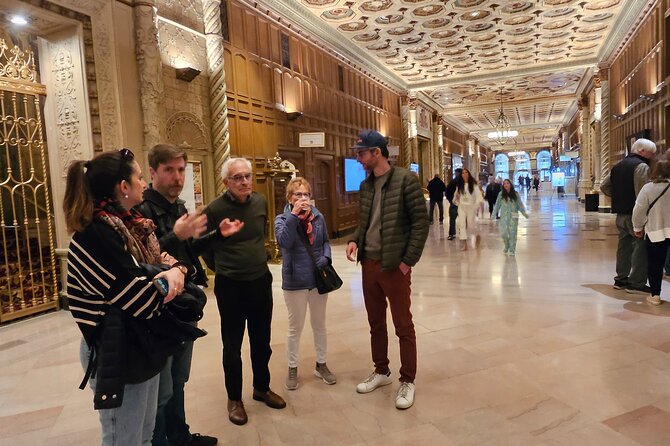
The Crystal Ballroom is one of the hotel’s grandest spaces and a major stop on the route. It has hosted Hollywood galas and also connects to major political history.
One particularly striking example presented on the tour is the 1960 Democratic National Convention event where John F. Kennedy was nominated for president. Seeing footage from that moment while standing in the same ballroom gives the room more weight than its decoration alone suggests.
This is also an excellent example of how the tour broadens beyond film. The Biltmore was not only a set. It was a place where public life, entertainment, and politics crossed paths. The ballroom’s polished appearance can suggest glamour, but the footage reminds you that serious national events took place here too.
The Crystal Ballroom may be the most rewarding stop for people who enjoy visual history. You get the room itself, the hotel’s design, and a major event connected to the space. The limit is again the one-hour schedule. Expect a focused presentation rather than an extended discussion of the convention or Kennedy’s campaign.
The Gold Room and Prohibition stories
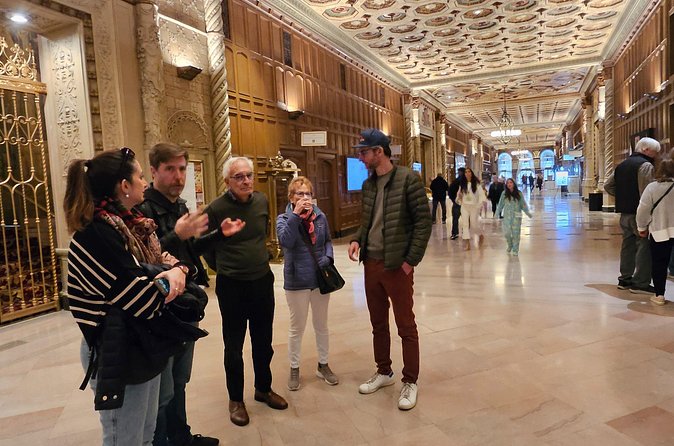
The Gold Room introduces a more secretive side of the hotel. It is linked to a Prohibition-era speakeasy, giving the tour a story of hidden activity behind the hotel’s formal public image.
This contrast works well. The Music Room and Crystal Ballroom present elegance in plain sight. The Gold Room points to the private, less official life of the building. The guide can use historical images and storytelling to show how the same hotel could serve public ceremonies, Hollywood gatherings, and discreet social activity.
The AR format is particularly suited to this subject. Old photographs, overlays, and footage can suggest what the space looked like in another era without requiring a large exhibit or a long lecture. You remain in the room, but the material gives you a sense of the people and events associated with it.
Do keep expectations sensible. The tour presents the speakeasy story as part of the Biltmore’s past, but the supplied details do not promise access to secret rooms or a theatrical reenactment. The appeal is historical context, not a staged prohibition show.
Ending at the Rendezvous Court
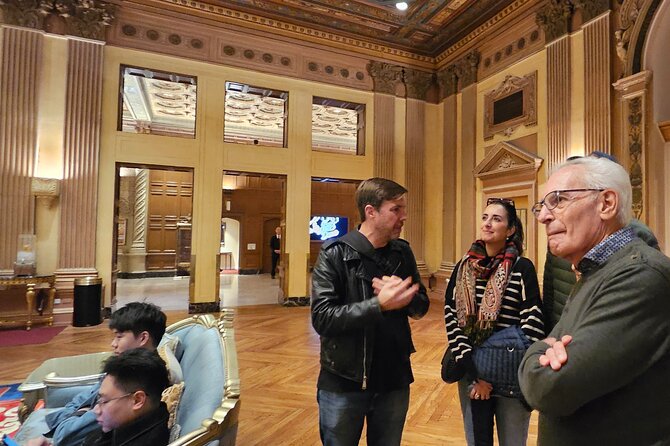
The route concludes at the Rendezvous Court, a Moorish-inspired space that provides a fitting final look at the hotel’s varied design.
After the Renaissance influence of the Music Room, the painted Galleria, the formal Crystal Ballroom, and the Gold Room, this final stop helps show how many visual styles are packed into one building. It is a good place to take stock of the hotel as architecture rather than only as a film set.
The ending also returns attention to the present-day Biltmore. The hotel continues to function as a real property, not a preserved movie museum. That distinction matters. You are seeing working spaces with a long past, not walking through a purpose-built attraction where every object has been arranged for display.
The tour ends back at the meeting point. That makes the experience easy to fit into a larger Downtown Los Angeles day. You can arrange another activity before or after without needing a separate pickup or drop-off.
How the smartglasses change the visit
The main feature is the smartglasses system. During the tour, the guide can send photographs, film clips, and historical footage to the glasses while you stand in the matching location. Your phone is also part of the experience.
This technology has a clear purpose. It lets you compare the building you see now with the building, event, or production connected to its past. The effect is strongest when a well-known scene appears in the exact room around you, such as a Ghostbusters sequence.
The glasses also make the tour different from a normal guided walk. A guide can tell you that something happened in a ballroom. AR material can show the ballroom in use, with people, decorations, and period details that no longer exist.
There are tradeoffs. Some people prefer to look at a room without a screen or overlay. If you find wearable technology distracting, the traditional architecture may compete with the digital content. The tour depends on the guide’s timing and presentation, so the quality of the experience is tied closely to how Mark or Eloi uses the equipment and explains what you are seeing.
The feedback about the experience is especially positive on this point. People who had never tried AR before found the glasses easy to appreciate because the images were tied to real places rather than floating free of context.
Price, group size, and practical value
At $25 per person, this is fairly priced for a guided one-hour experience in a landmark hotel, especially since the fee includes admission. You are paying not just to enter the building but for a guide, a planned route, and the AR material that connects the rooms to film and history.
The value depends on your interests. If you already know the Biltmore well and only want to admire the architecture at your own pace, you may prefer an independent visit if available. If you want film clips, historic images, and a guide who links the hotel to Downtown LA, the price is easier to justify.
The maximum group size is 10 people. That is small enough to make questions practical and should help you keep up with the guide. The exact feel will depend on the group, but a small format is useful in corridors and formal rooms where a large crowd would be awkward.
The tour is offered in English. Confirmation arrives when you book, mobile tickets are available, and the hotel is near public transportation. The meeting point is 507 South Olive Street in Downtown Los Angeles, and the tour returns there.
Because the tour averages booking about 25 days in advance, planning ahead is sensible if your schedule is fixed. Free cancellation is available up to 24 hours before the start time. Cancellations or changes made less than 24 hours before the start are not accepted for a refund.
Who will enjoy this Biltmore experience most?
I would recommend it to:
- Film fans who want to see real production locations rather than only hear lists of titles
- People curious about the first Academy Awards
- Visitors interested in Downtown Los Angeles and its civic history
- Families with older children who enjoy technology and visual storytelling
- Angelenos who have passed the Biltmore but never explored its connections to film and politics
- Architecture fans who want a short guided introduction to the hotel’s decorative rooms
It is also a good choice for someone who has never tried augmented reality. The technology has a simple purpose here: place past images and film moments into the actual building.
I would be more cautious about recommending it to someone seeking a long, quiet architectural tour. The route is compact, the guide keeps the story moving, and the digital material is a central part of the visit.
Should you book the Oscar History and Film Set Studio Tour?
Book it if you want a short, focused way to connect the Biltmore’s rooms with movies, music videos, Oscar history, Prohibition, and Los Angeles politics. The strongest moments come when the glasses show a scene or old image while you are standing in the real location.
At $25, the tour offers good value for a small group and a distinctive presentation. Just remember that one hour goes quickly. You will get a lively introduction to the Biltmore, not every detail of its past.
For the best fit, choose this tour if the idea of watching Ghostbusters, Chinatown, Taylor Swift footage, Oscar material, or JFK-related history in its original setting sounds appealing. If that sounds like your kind of sightseeing, the Biltmore becomes much more than a grand hotel lobby.
FAQ
Where does the tour begin?
It begins at the Millennium Biltmore Historic Hotel, 507 South Olive Street, Los Angeles, California 90013.
Where does the tour end?
The activity ends back at the meeting point at the Biltmore Hotel.
How long does the tour last?
The tour lasts approximately one hour.
How much does the tour cost?
The listed price is $25 per person.
What language is the tour offered in?
The tour is offered in English.
How many people can join the tour?
The maximum group size is 10 people.
Is the Biltmore near public transportation?
Yes. The hotel is near public transportation.
What technology is used during the experience?
The tour uses augmented-reality smartglasses, along with a phone, to show photographs, footage, and film clips connected to the hotel.
What places inside the Biltmore are visited?
The route includes the Music Room, Galleria, Historic Corridor, VIP Olive Street Entrance, Crystal Ballroom, Gold Room, and Rendezvous Court.
Can I cancel for a full refund?
Yes. You can cancel up to 24 hours before the experience start time for a full refund. Changes or cancellations made less than 24 hours before the start are not accepted for a refund.
More History Behind the Scenes around Los Angeles
- Historic Hollywood Boulevard and Movie Palaces Walking Tour
★ 5.0 · 9 reviews - Hollywood History Tour
★ 5.0 · 8 reviews - Historic Hollywood Boulevard and Movie Palaces Walking Tour
★ 4.8 · 4 reviews - Los Angeles: Hollywood Hills Spiritual and Cultural Tour
★ 5.0 · 2 reviews
More Film Studio Tours around Los Angeles
- Universal Studios Hollywood & Celebrity Homes Tour Package
★ 3.5 · 46 reviews - Los Angeles: Universal Studios Hollywood & Bus Tour Package
★ 4.1 · 11 reviews - From London: Harry Potter Warner Bros Studio Tour
★ 4.7 · 26,588 reviews - Los Angeles: Warner Bros. Studio Tour Hollywood
★ 4.6 · 7,191 reviews
Just added around Los Angeles
- Hollywood and Beverly Hills Bus Tour★ 5.0 · 2 reviews
- West Hollywood Food Tour★ 4.5 · 54 reviews
- Warner Bros. Studio Tour & Hop-on Hop-off Bus Tour Package★ 3.5 · 55 reviews
- Total Hollywood Experience with Walk of Fame and Celebrity Homes Tour★ 4.0 · 3 reviews
- Universal Studios Hollywood & Celebrity Homes Tour Package★ 3.5 · 46 reviews
- LA Walk of Fame 100 Years of Hollywood Tour By Junket★ 5.0 · 3 reviews
- The Ultimate Hollywood Tour★ 5.0 · 8 reviews
- Lost Souls of Hollywood Blvd: a Smartphone Audio Ghost Tour★ 4.0 · 4 reviews
Film Studio Tours, compared.
Harry Potter: Warner Bros. Studio Tour from King’s Cross
Read our review →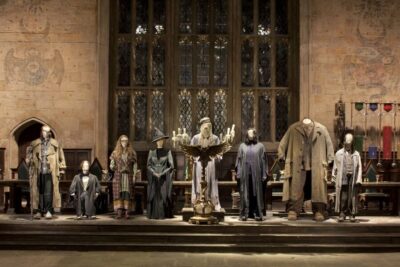
Warner Bros. Studio Tour with Return Transportation
Read our review →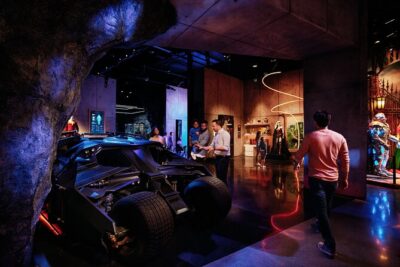
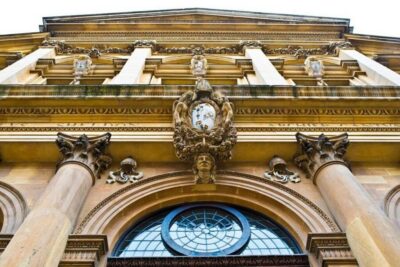
Harry Potter Studio Tour and Oxford Day Trip
Read our review →
Harry Potter Warner Bros. Studio Tour with Transport from London
Read our review →